Skip to content

News

collected blogs

iGEM Hamburg Team Awarded Gold Medal

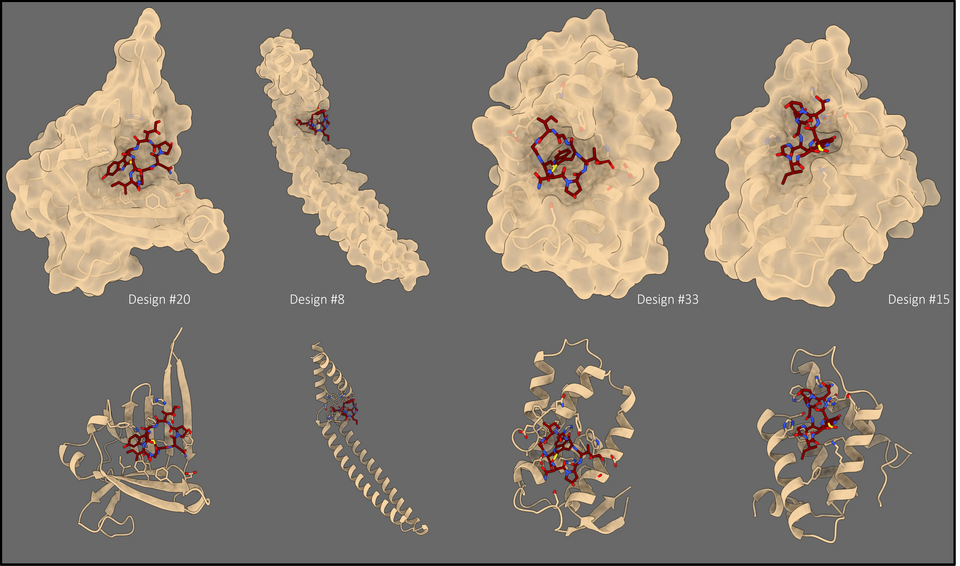
With their project “DeathCapTrap,” the iGEM Hamburg team developed an antidote to one of the most dangerous fungal toxins in the world. They were awarded a gold medal for their work at the largest student competition for synthetic biology in Paris. The Hamburg team of ten students was received a gold medal and another nomination at this year's iGEM Grand Jamboree, the synthetic biology industry’s largest innovation event hosted by the International Genetically Engineered Machine (iGEM) Foundation. This placed the team among the top three project groups in their category. A total of 420 teams from more than 50 countries participated in the competition.

Congratulations to the team! We are glad that we could support the effort a tiny bit with the Maxwell cluster. See also the

Discovery of Goethe’s amber ant: its phylogenetic and evolutionary implications

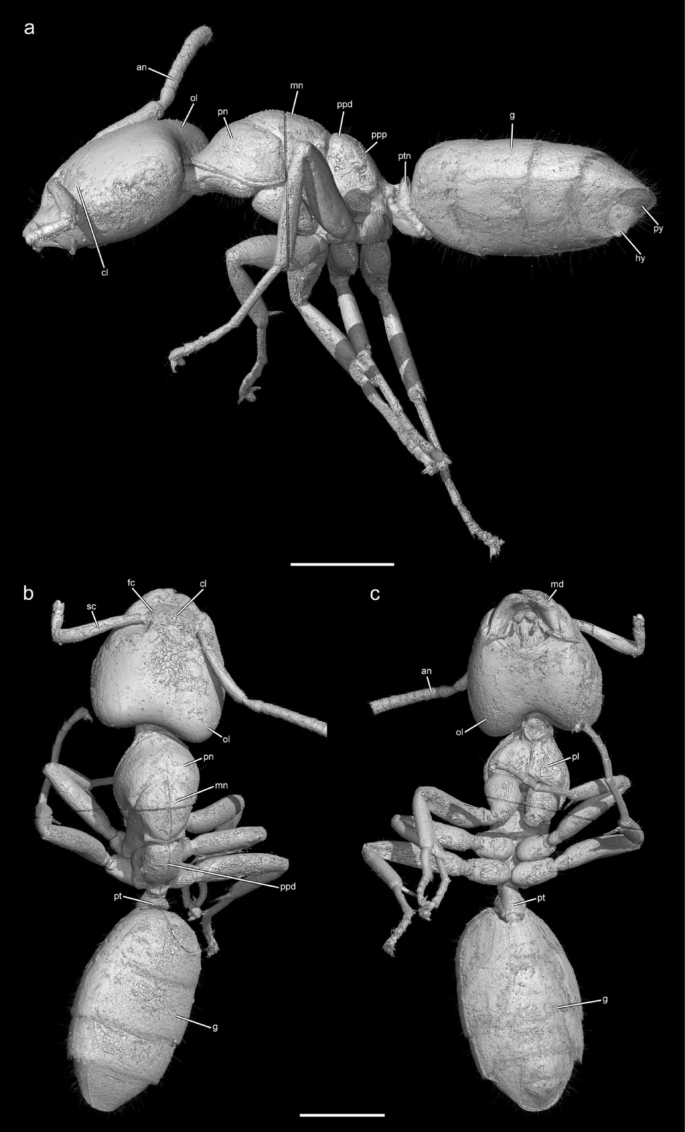
Museum collections remain essential scientific resources, especially when revisited using modern analytical techniques. In an interdisciplinary study, we examined the overlooked amber collection of Johann Wolfgang von Goethe (1749–1832), polymath and pioneer of art and natural science. Using synchrotron-based micro-computed tomography (SR-µ-CT), we identified a fossil ant from Baltic amber (Eocene ~ 47–34 Ma) in Goethe’s collections. The specimen is assigned to †Ctenobethylus goepperti (Mayr in Die Ameisen des Baltischen Bernsteins. Beiträge zur Naturkunde Preussens, 1868), which we redescribe and re-diagnose, proposing †Eldermyrmex exsectus Dubovikoff et Dlussky, 2019 as its junior synonym (syn. nov., comb. nov.). We further infer a potential sister-group relationship with the extant genus Liometopum Mayr, 1861, suggesting that †C. goepperti may have been a dominant arboreal species in warm-temperate coniferous forests, a scenario which is supported by its abundance in Baltic amber. Critically, our results document endoskeletal structures in a Cenozoic fossil ant, underscoring both the morphological value of historical collections and the lasting scientific legacy of Goethe’s naturalist vision.

Sci Rep

Brendon E. Boudinot et al.

A tunable despeckling neural network stabilized via diffusion equation

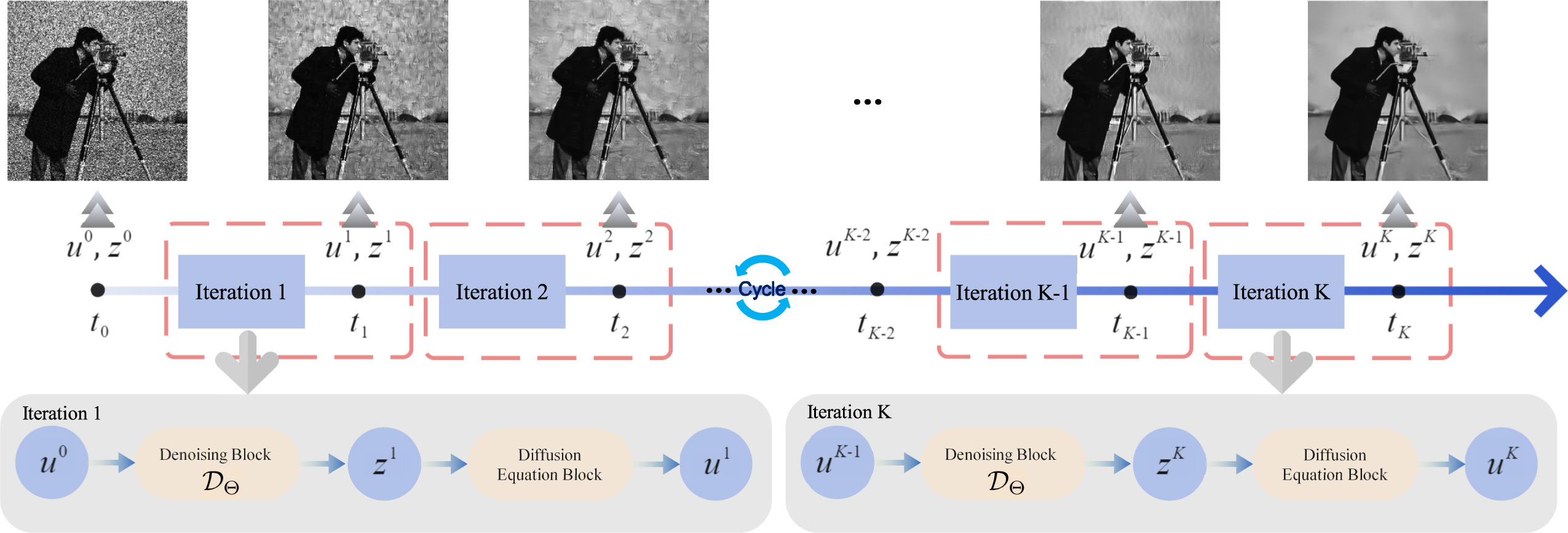
The removal of multiplicative Gamma noise is a critical research area in the application of synthetic aperture radar (SAR) imaging, where neural networks serve as a potent tool. However, real-world data often diverges from theoretical models, exhibiting various disturbances, which makes the neural network less effective. Adversarial attacks can be used as a criterion for judging the adaptability of neural networks to real data, since they can find the most extreme perturbations that make neural networks ineffective. In this work, we propose a tunable, regularized neural network framework that unrolls a shallow neural denoising block and a diffusion regularization block into a single network for end-to-end training. The linear heat equation, known for its inherent smoothness and low-pass filtering properties, is adopted as the diffusion regularization block. The smoothness of our outputs is controlled by a single time step hyperparameter that can be adjusted dynamically. The stability and convergence of our model are theoretically proven. Experimental results demonstrate that the proposed model effectively eliminates high-frequency oscillations induced by adversarial attacks. Finally, the proposed model is benchmarked against several state-of-the-art denoising methods on simulated images, adversarial samples, and real SAR images, achieving superior performance in both quantitative and visual evaluations.

Signal Processing

Yi Ran et al.

2025-09-29: New GPUs and Partitions

The HPC Gateway initiative of the Helmholtz society aims to open access to the Helmholtz Association's world-leading HPC infrastructure for businesses and connects them with AI experts. The initiative particularly supports projects in the areas of AI, digital twins, and HPC-based innovations. See Helmholtz press release for more information.

New GPU hardware has been funded by HPC Gateway, and became now part of the Maxwell cluster. The hardware is specifically serving industry to support and initiate AI activities. The hardware comprises 8 nodes with 4xH200-NVL and 1.5TB of memory each.

  • The hpcgwgpu partition is dedicated to co-operations with industry and not available otherwise.
  • The compgpu partition makes the precious hardware available to all Maxwell users.

Jobs in the comgpu partition are (not suprisingly) subject to preemption (by jobs in the hpcgwgpu partition). However, we expect the preemption-rate to be much lower than in the allgpu-partition, particularly in the early phase of the HPC Gateway project.

Due to the small number of nodes, limits apply in the comgpu partition:

  • maximum number of concurrently running jobs per user: 2
  • maximum number of jobs per user: 2

Please note: due to the nature of the HPC Gateway project, only software allowing commercial use is available in on HPC Gateway hardware. Tools like Matlab, Mathematica, Ansys, IDL or similar are not available in partitions hpcgwgpu or comgpu.

Acknowledgements of the Maxwell cluster and - if appropriate - the HPC Gateway project in your publications would be greatly appreciated.

2025-09-01: Solaris subcluster in Maxwell

the solaris sub-cluster in Maxwell serves in particular non-demanding batch and interactive jobs.

We have recently added a bit of hardware and a number of services to solaris.

Hardware

solaris is kind of a retirement home for old hardware. Selected pieces of hardware have been retired in Maxwell, but can still serve some purpose in the solaris subcluster. We habe recently added P100 GPU nodes to solaris, as well as ARM-processors.

The P100 GPUs are ancient, and not supported with CUDA 13, but can still be used for developments and graphical applications suffering from memory and core limitations on the display nodes.

The ARM cpus are of type ARM ampere Neoverse-N1. The ARM processor has an entirely different architecture, and x86-software will hence not work. However, the ARM processors might still be useful for developments and tests.

Services

solaris meanwhile also comes with a portal exposing the same services as the Maxwell portal. It offers in particular a dedicated jupyterhub supporting all hardware platforms (cpus, gpus, arm).

Illuminating Rembrandts Chiaroscuro in The Night Watch: the painting process of Van Ruytenburchs costume

This study examines Rembrandt’s use of chiaroscuro to depict the costume of Lieutenant Willem Van Ruytenburch, a prominently lit figure in The Night Watch (1642). As part of Operation Night Watch, the painting was analyzed using noninvasive imaging techniques, including reflectance imaging spectroscopy (RIS), macroscopic X-ray powder diffraction (MA-XRPD), and macroscopic X-ray fluorescence (MA-XRF). These methods enabled the mapping of the artist’s pigment palette, which includes lead white, lead-tin yellow, ochres, vermilion, arsenic sulfide pigments, red lakes, smalt, and azurite. Rembrandt applied these pigments in a consistent, systematic way, combining them in groups to achieve pictorial unity. Notably, arsenic-based pigments were used to capture the warm reflections of gold threads, unique to Van Ruytenburch’s costume. MA-XRPD also identified degradation products—mimetite, weddellite, and palmierite—associated with the original pigments. These results provide new insights into Rembrandt’s modus operandi and inform understanding of the current condition and implications for its conservation.

npj Herit. Sci.

Nouchka De Keyser et al.

2025-07-13: pixi

pixi has been added. pixi is a powerfull package manage and an excelent alternative to conda, pip et al.. It's particularly great to package and deploy complete environments in arbitrary locations. Added a thin container around a self-extracting pixi package allows to manage and version environments through the container registry.